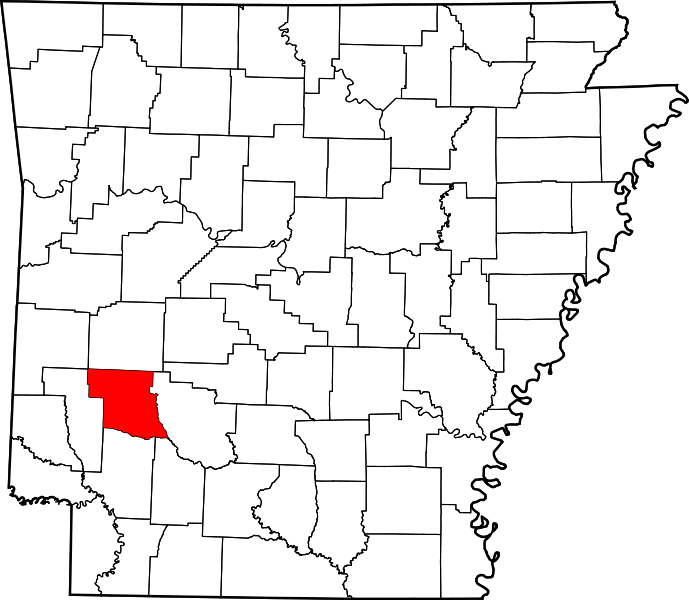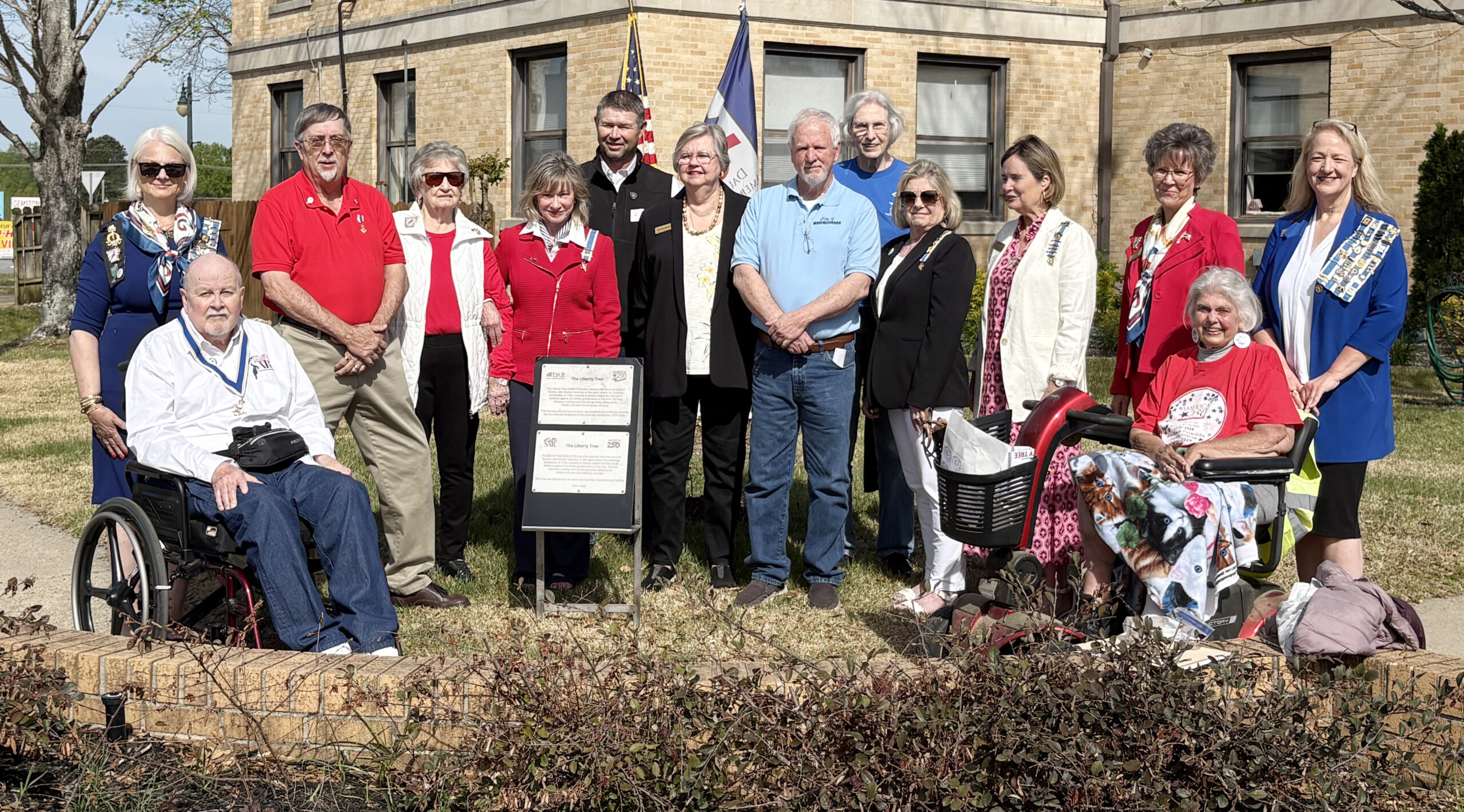
On April 8, 2026, the Pike County Courthouse Square in Murfreesboro served as the backdrop for a meaningful Liberty Tree Dedication hosted jointly by the DeSoto Trace Sons of the American Revolution and the Mine Creek-Paraclifta Daughters of the American Revolution.
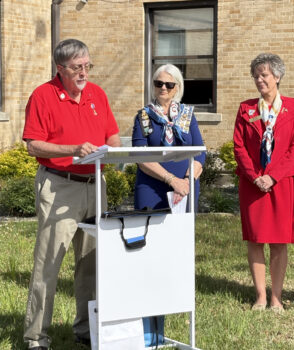
The event was initiated by Michael Myers of the SAR chapter, with Elizabeth Wilson Overton, Regent of the local DAR chapter, conducting the ceremony. Rodney Young, President of the SAR chapter from Hot Springs, addressed those gathered and reflected on the importance of remembering the principles represented by the Liberty Tree.
Among those in attendance were Carrie McGaha, Arkansas State DAR Chaplain; Terry Haygood, Regent of the Arkadelphia DAR Chapter; Sharon Whitledge, Arkansas State DAR Recording Secretary, Brenda Barham, John Cain DAR Chapter, Fran Strawn, Mine Creek-Paraclifta Registrar, Mine Creek-Paraclifta members Velma Owens, Leann Turner and Judy Hile, Recording Secretary of the Mine Creek-Paraclifta Chapter, who also provided elm tree seedlings for guests as a living reminder of the occasion. Local officials Pike County Judge Eddie Howard and Murfreesboro Mayor Jim O’Neal were also present, along with guests from the community.
Attendees received a printed explanation describing the significance of the Liberty Tree and its place in American history.
A Symbol from the Revolution
The original Liberty Tree stood in Boston in the 1760s and became a gathering place for colonists protesting British rule. Beneath its branches, citizens organized resistance to the Stamp Act and other forms of unjust taxation. The tree soon became a powerful symbol of unity, courage, and the growing desire for self-governance. Though British soldiers later cut it down, the symbolism of the Liberty Tree spread throughout the colonies and remains an enduring emblem of freedom.
Following the ceremony, refreshments and fellowship were enjoyed across from the courthouse at the Pike County Archives & History Society, graciously provided by Darlene Watson, Charlotte McCauley, and John Gould.
The Liberty Tree Dedication served as a reminder that the ideals first championed beneath the branches of a Boston elm more than 250 years ago are still deeply rooted in communities today.