By John Balch
News-Leader staff
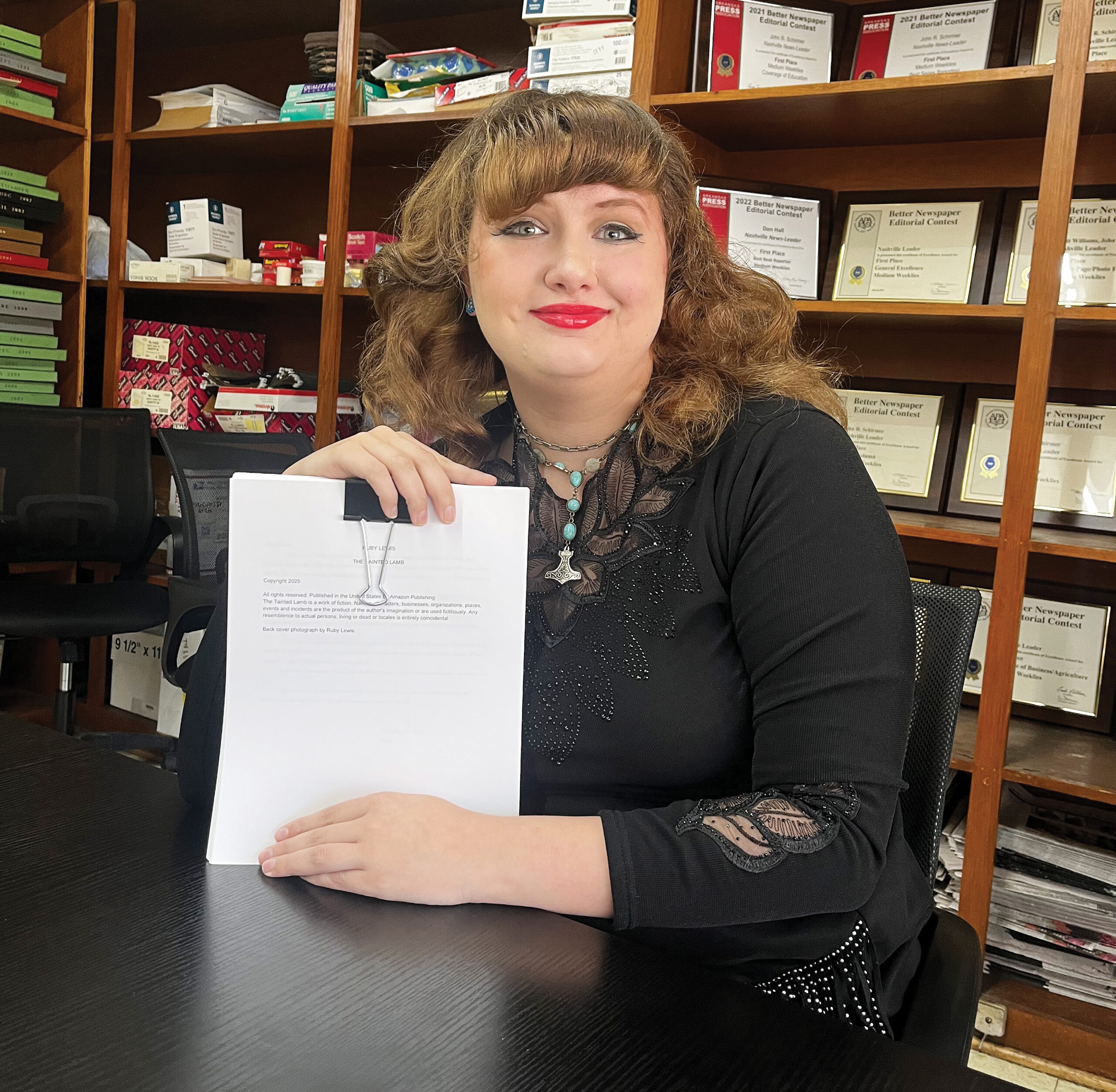
A daydream of becoming a published author has become reality for a young Nashville author who has spent a lifetime making the dream come true while living with autism, bipolar disorder and severe dyslexia.
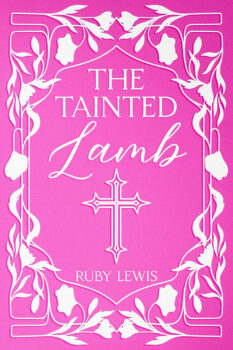
Brenna Lewis, 22, is set to publish her first novel, The Tainted Lamb, under her pen name “Ruby Lewis” available April 5 for Kindle at Amazon. The book is now available for pre-order for $7.
Lewis was first diagnosed with severe dyslexia when she was 5. Her autism spectrum disorder was discovered at age 15 followed by bipolar disorder at 20. She controls her conditions with medication and therapy.
Lewis’ debut is a fiction novel that comes from a mind constantly daydreaming, a condition called maladaptive disorder and serves as the seed of the artistic direction for most of Lewis’ “little obsessions.”
These type obsessions – also known as hyperfixations – are common in autistic people and with Lewis, they steer what’s coming next for her writing.
“My writing is a hyperfixation,” she said. “And sometimes it’s just the element of writing.”
To understand hyperfixation, Lewis offered an example of a past/present fixation that involves the Civil War: “I had to learn everything about it,” and obsessively consumed every piece of information and watched everything she could find on Civil War history.
Then, Lewis said, the really “hyper” part of the fixation took over. “I even made my own Civil War dress.” She then signed up with the nearby Civil War reenactment group, which Lewis said quickly “booted me off for being autistic” for some unexplained reason. That ended that specific part of the fixation, but still today, Lewis has a gripping fascination with Civil War history and it continues to surface in her work.
“(Hyperfixation) can be completely harmless, but sometimes it goes unhealthy,” Lewis said.
That’s just life for someone on her area of the spectrum.
“I am able to function like a normal human being,” she said. “It’s just, I don’t get social cues.”
Lewis said she is also prone to pacing and constant movement and if she gets anxious, she will “stem” by flapping her wrists. “Sometimes you just have to shake it out,” she said.
Being on the spectrum is sometimes like a “double-edged sword,” according to Lewis.
“When you’re autistic, you’re either too emotional or not emotional enough in certain terms,” she said. “We always have the wrong thing.”
Lewis has dealt with insults and name-calling for so long that she said it’s hard for her to process now. At this point in her life, she said she has a more of a “grit teeth and bare it” attitude when it comes to her work, opinions, social media presence or simply life and how to live it. Her favorite tool on social media is the “block” tool.
“I’ve dealt with so much backlash over the years that I’m just, like, ‘okay,’” she said. “I know now my opinions are different from their opinions.”
Lewis thinks her autism helps make her a free thinker; hungry for information and knowledge, and she said some “people don’t like that.”
“We live in a neurotypical society – a society built for neurotypical people,” she explained.
“Neurodivergent people, we get ostracized because we think too freely or ask too many questions or we question the wrong thing when society just wants us to go along with a pattern.”
Lewis was first diagnosed with dyslexia when she was 5. She claims the education system “completely pushed me aside” and school was difficult due to relentless taunting and bullying and personal attacks about her intellect and inability to read fluently. Her family ended up using a private tutor for Lewis’ dyslexia.
“Being ostracized by your peers” was bad enough and Lewis claimed her teachers and the education system were negligent in dealing with her then-undiagnosed autism and bipolar disorders.
“I was not given any help by our education system,” said Lewis, who also somewhat conceded, “I know it’s different today, but still…”
Lewis’ mother, Angie Lewis, said she has to disagree with her daughter’s assessment of the educational system, stressing that she certainly understands how her daughter developed such a negative view.
“(The school) literally tried everything to help her learn to read. It was before the schools had dyslexia tutors,” mom said. “I felt like she was Helen Keller at times locked in a world she couldn’t function in.”
The private tutor mentioned is named Kathy Woll and mother describes her as “our miracle worker.”
“Brenna would never have learned to read without her.”
Despite a rough start, Lewis is an avid reader who also uses listening apps when she is “feeling lazy.” When she writes, she runs chapters and notes on apps and uses an online editor.
“At the beginning, I didn’t even like to read because it was so difficult for me,” she said.
The Tainted Lamb is the first of her books to be published, but Lewis said she has numerous other side projects in the works, including five books. All of Lewis’ work, with the exception of her documentary-style film work, is fiction and will be forever. She recalled her first writing projects were “fan fiction” about her favorite television shows.
“I will never go non-fiction,” the author said. “I like the element of fiction because you can do whatever you want with it.”
Just because Lewis writes in the fantasy world, she does not shy away from including political parodies or other controversial topical subject matter in her works. For example, her debut novel is about a Texas evangelist who has an intersex daughter deemed a “miracle baby” and tackles the topic of gender dysphoria.
“I just feel like we should try our best to include those who are discriminated against,” she said, adding, “I’d rather be hated for who I include than liked for who I don’t include.”
To sum it up: “If someone has a problem with my writing, I don’t care about it.” (Bluntness is also a trait of Lewis’ place on the spectrum.)
Lewis said her work almost always includes references to her conditions whether through metaphors, symbolism or directness. Hyper-fixation helps her become an informed writer and steers the in-depth research of her topics. She “brainstorms” and daydreams constantly and tries her best to document it all.
But, Lewis admits that her state of mind will determine what comes next and when.
“I flip-flop from book to book, and it’s just whenever I’m in the mood to write” – and which mood is a whole other factor, Lewis said.
In fact, a fantasy book series about “how the south has romanticized the Civil War” has been in Lewis’ mind since she was 15 and is finally nearing completion with the help of an online collaborator. Lewis is currently excited about this fact and calls the “Civil War fantasy” her best work and includes a chapter where Robert E. Lee “rides into battle on a fluffy pink unicorn.”
As Lewis puts it: “I’m not an autistic writer. I’m a writer with autism.”